
Call us now :08045803038
 Send Inquiry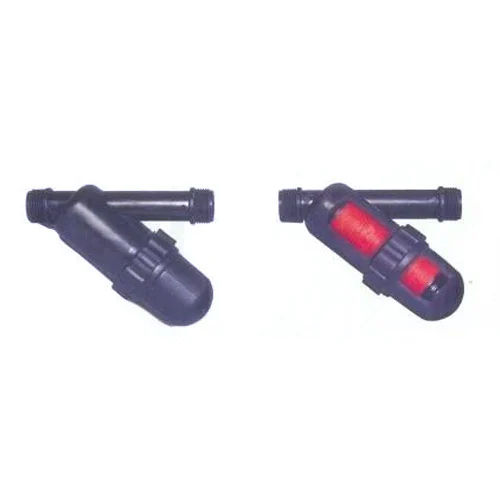
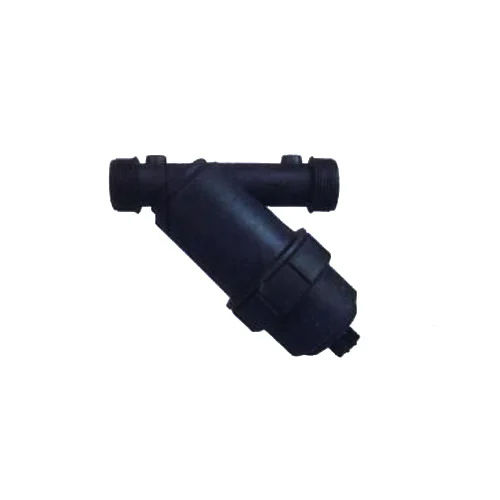
Disc Filters
2300 INR/Set
Product Details:
- Filter Type Disc Filter
- Coverage Area Up to 7 Acres
- Automation Grade Semi-Automatic / Manual
- Flow Rate 10 m/hr to 50 m/hr
- Power Source Manual / Hydraulic
- Product Type Irrigation Disc Filter
- Form Cylindrical Disc Module
- Click to View more
X
Disc Filters Price And Quantity
- 2300 INR/Set
- 12 Set
- Up to 60°C
- Horizontal / Vertical
- Manual Backwash
- Black with Red Discs
- Threaded / Flanged Ends
- 100 to 130 Micron
- High Dirt Holding Capacity, Durable Construction, UV Resistant
Disc Filters Product Specifications
- 1.5 to 8 Bar
- Disc Filter
- Semi-Automatic / Manual
- Up to 7 Acres
- 2 inch to 4 inch (50 mm to 110 mm)
- 10 m/hr to 50 m/hr
- High-Grade Polypropylene / Plastic
- Agricultural Irrigation Water Filtration
- Suitable for Medium to Large Fields
- Water Filtration for Irrigation Systems
- 360 Cleaning Possible
- Cylindrical Disc Module
- Irrigation Disc Filter
- Manual / Hydraulic
- Up to 60°C
- Horizontal / Vertical
- Manual Backwash
- Black with Red Discs
- Threaded / Flanged Ends
- 100 to 130 Micron
- High Dirt Holding Capacity, Durable Construction, UV Resistant
Disc Filters Trade Information
- 12 Set Per Day
- 3 Week
Product Description
A disc filter consists of a stack of discs, each with a series of microscopic grooves. The dimension of the grooves determines the effective mesh size of the filter, ranging from 40 to 600 mesh. Water is filtered as it flows through the grooves.Advanced Filtration Performance
These disc filters efficiently capture particles sized 100 to 130 microns, preventing clogging and safeguarding irrigation emitters. The cylindrical disc module form optimizes dirt holding capacity, reducing maintenance cycles and improving filtration consistency for medium to large agricultural fields.
Reliable Construction and Adaptability
Built from high-grade polypropylene and reinforced plastics, the filters ensure robust durability and UV resistance-ideal for outdoor agricultural climates. Mounting options (horizontal or vertical) and compatibility with both manual and hydraulic power sources make them highly adaptable to diverse irrigation setups.
User-Friendly Cleaning Process
A manual backwash cleaning method, combined with 360 disc rotation, enables thorough removal of trapped debris, keeping maintenance simple and effective. The semi-automatic/manual operation streamlines the workflow without dependence on complex automation, providing flexibility in the field.
FAQ's of Disc Filters:
Q: How do disc filters with a 100 to 130 micron rating benefit agricultural irrigation systems?
A: These disc filters provide fine particle filtration that helps prevent emitter blockage in drip and sprinkler systems, ensuring consistent water distribution and reduced downtime for maintenance. Their high dirt holding capacity further enhances operational efficiency for medium to large-sized fields.Q: What is the recommended process for cleaning these disc filters?
A: Cleaning is performed using manual backwash. The disc module can be rotated 360, allowing water or air to dislodge and remove trapped particles, which is quick and reduces filter disassembly. For optimal performance, clean the filters whenever a significant drop in water flow or pressure is observed.Q: When should these disc filters be installed in an irrigation setup?
A: They should be installed before the main distribution lines of an irrigation system, typically at the water source entry point, to ensure all downstream components are protected from contaminants. Install them at the beginning of the irrigation season or when setting up a new system.Q: Where can these disc filters be used effectively?
A: Designed for medium to large agricultural fields (up to 7 acres), these filters are suitable wherever reliable water filtration is essential-such as row crops, orchards, greenhouses, and commercial plantations in India and similar climates.Q: What makes these disc filters durable and suitable for outdoor use?
A: Constructed from high-grade polypropylene and robust plastic, the filter body resists UV rays and environmental wear. The black and red design also helps in reducing sunlight degradation, ensuring a long service life in outdoor conditions.Q: How does the threaded or flanged connector type affect installation?
A: Threaded and flanged connection options accommodate various pipe sizes (2" to 4"), simplifying integration into existing or new irrigation infrastructures. Threaded ends offer quick assembly, while flanged ends provide secure, leak-resistant joints for higher flow systems.Q: What are the main benefits of choosing a manually or hydraulically operated disc filter?
A: Manual or hydraulic operation ensures maintenance remains simple, cost-effective, and reliable, especially in remote locations without ready access to electrical power. This flexibility reduces operational downtime and supports seamless irrigation management.Tell us about your requirement

Price:
Quantity
Select Unit
- 50
- 100
- 200
- 250
- 500
- 1000+
Additional detail
Mobile number
Email

Other Products in 'Agricultural Irrigation Systems' category

"We are accepting bulk order quantity."
 Send Inquiry

Our Products
- Dust Suppression System
- Irrigation System
- Screen Filter
- Dry Fog System
- Rain Gun
- Sprinkler
- Pop Up Sprinklers
- Hdpe Sprinkler Pipes And Fittings
- Drip Irrigation System
- Fogger
- Quick Coupling Valve
- Air Release Valve
- Mirco Sprinklers
- Irrigation Sprinklers
- Agricultural Irrigation Systems
- Air Pollution Control Equipment
- Spray Nozzles
- Sprinkler Irrigation System

P-6, Scheme VI, C.I.T. Road, Kolkata - 700054, West Bengal, India

Mr. Sumit Parsan
(Director)
Mobile :08045803038
 Send Inquiry
 Send SMS
 Call Me Free
Developed and Managed by Infocom Network Private Limited.


